NOAA’s Climate Prediction Center is forecasting a greater than 90% chance of a “very strong” El Niño this fall and winter, with roughly a 2-in-3 chance it rivals the historic 1997-98 and 1982-83 events — years that brought more than double Southern California’s typical rainfall. For Ventura County, that means more storms, heavier runoff, and a lot more stress on yards that were never properly graded for water in the first place. If your driveway pools after a normal rain or your patio slab has started to lift or crack near the edges, this is the year those problems get worse, not better.
Why Camarillo yards are especially exposed
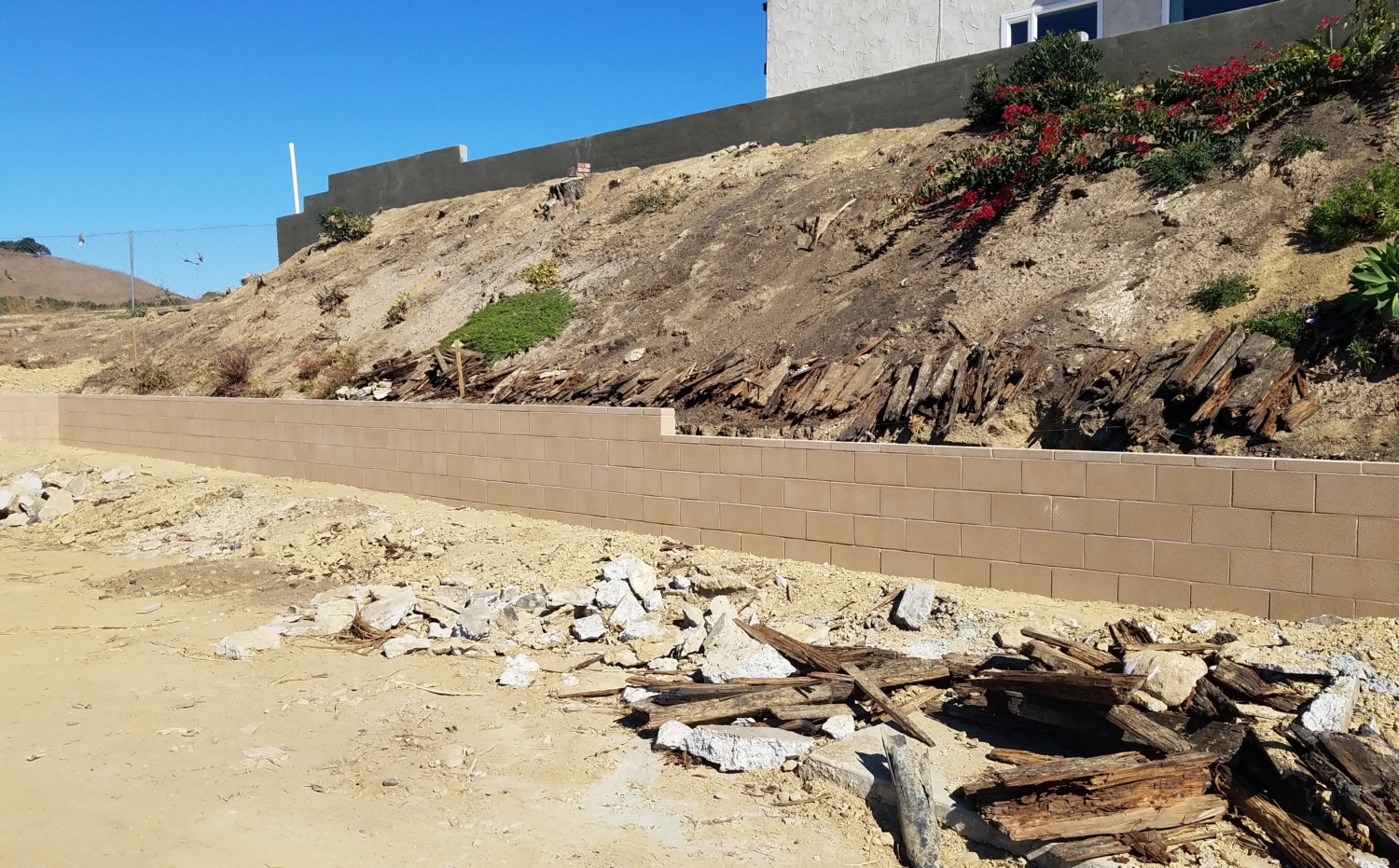
Much of Camarillo sits on clay-heavy soil that doesn’t drain well to begin with — it swells when saturated and shrinks as it dries, which is a major reason concrete slabs and retaining walls crack over time. In neighborhoods with sloped lots, like parts of Camarillo Heights, poor grading sends water straight toward foundations, driveways, and retaining walls instead of away from them. A wetter-than-normal winter turns a minor drainage issue into standing water, undermined slabs, or a failing wall.
Warning signs to check before the storms hit
A few things worth walking your property for now: water pooling near the base of your driveway or patio after a light rain, gaps or settling where concrete meets the house or a retaining wall, cracks that seem to widen every winter, and any retaining wall that looks like it’s bulging or leaning. These are usually signs that water isn’t being routed away from the structure the way it should be.
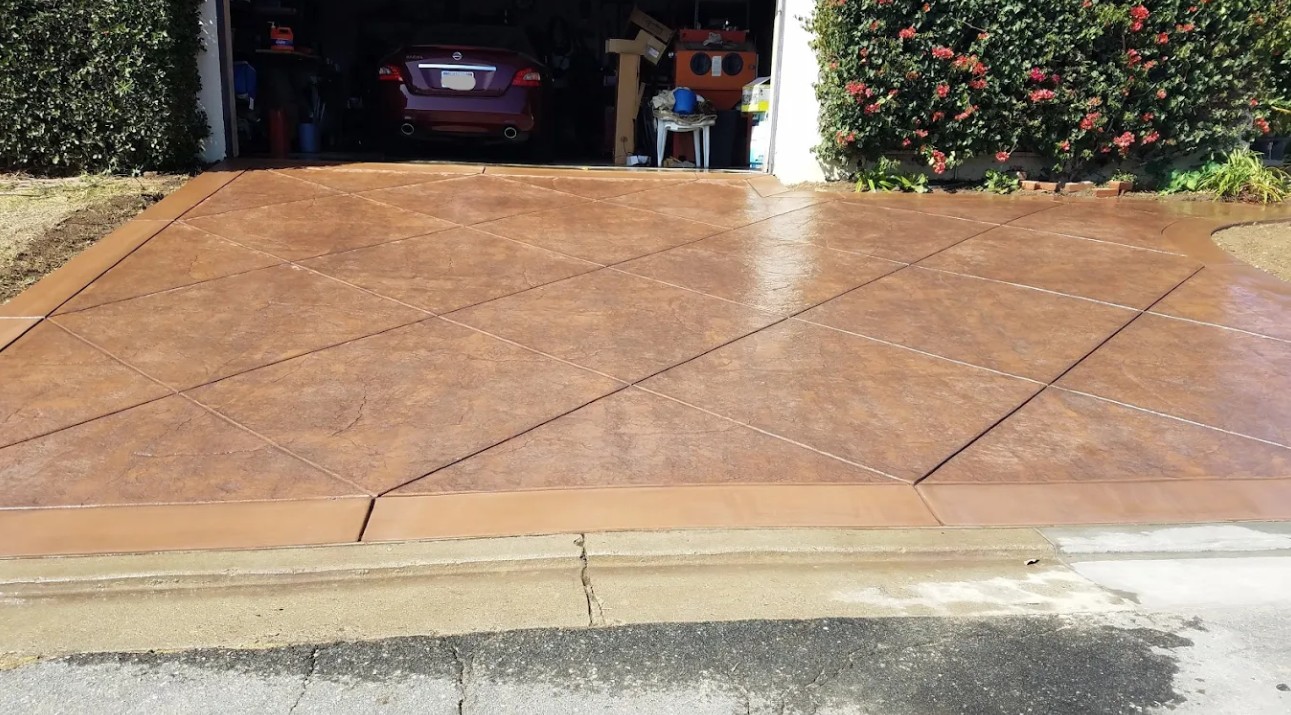
How grading and drainage protect what’s already there
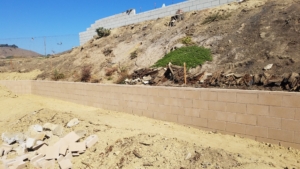
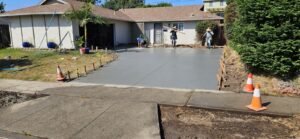
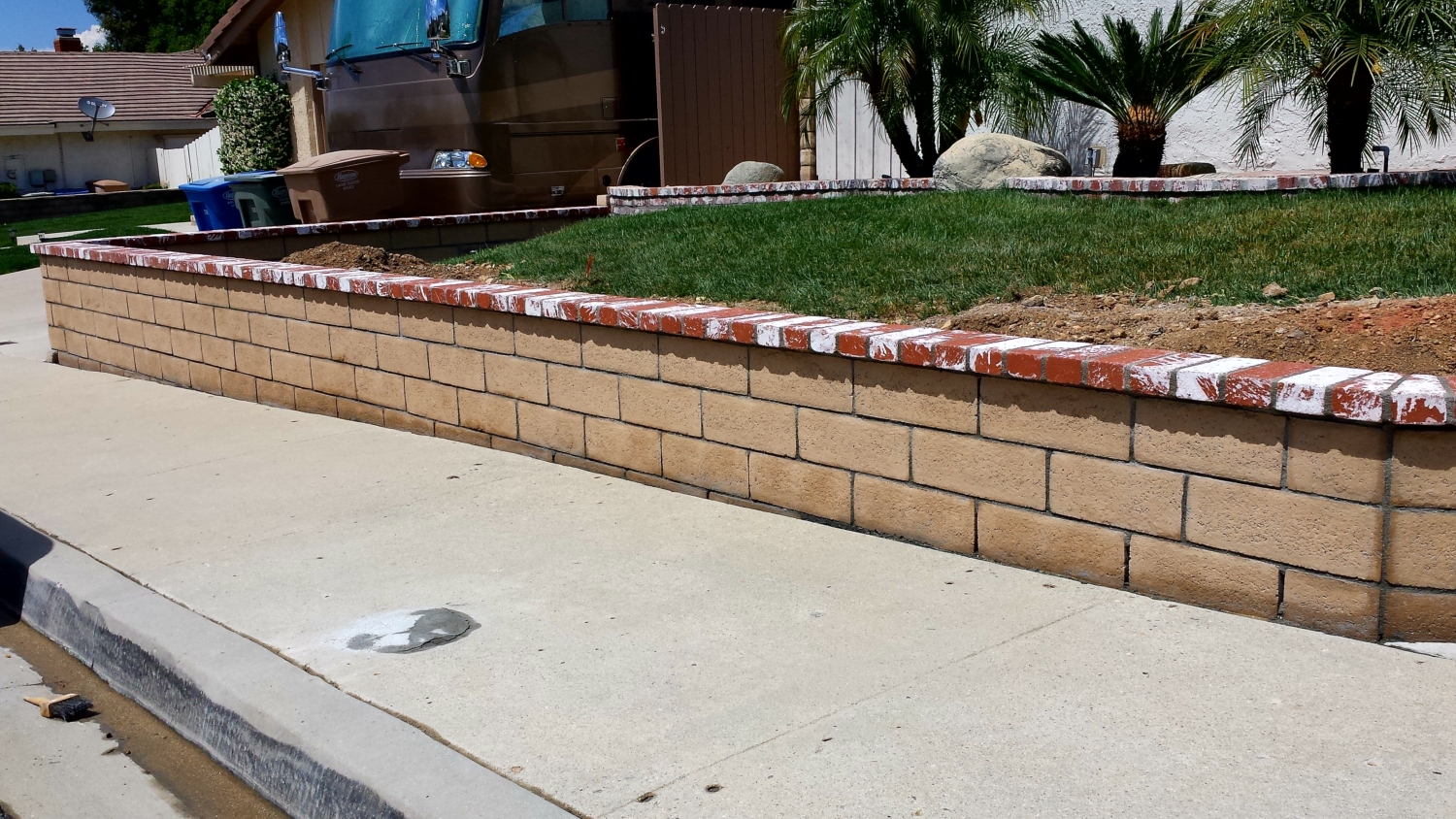
Proper grading isn’t just about digging a slope — it’s about directing water away from your driveway, patio, and walls before it has a chance to sit and do damage. On retaining wall work, our approach includes perforated drain pipe and clean gravel backfill behind the wall so hydrostatic pressure doesn’t build up and push the wall out — a common failure point when a wall was built without proper drainage to begin with. The same principle applies to patios and driveways: the base prep and slope underneath matter as much as the concrete on top. If you’re dealing with a driveway that’s already cracking, it’s worth reading our guide on who handles cracked driveway repair in Camarillo — a lot of what looks like normal wear is actually a drainage problem underneath.
What a drainage assessment with Venco looks like
Daniel Ruiz and the Venco team have been doing this in Camarillo for over 25 years, so a walk-through of your property isn’t guesswork — it’s checking soil compaction, existing slope, where water currently exits (or doesn’t), and whether an existing retaining wall or slab has drainage built in at all. From there we can talk through what actually needs to change, whether that’s regrading a section of yard, adding drainage behind a retaining wall, or repairing a driveway or patio that’s already showing damage.
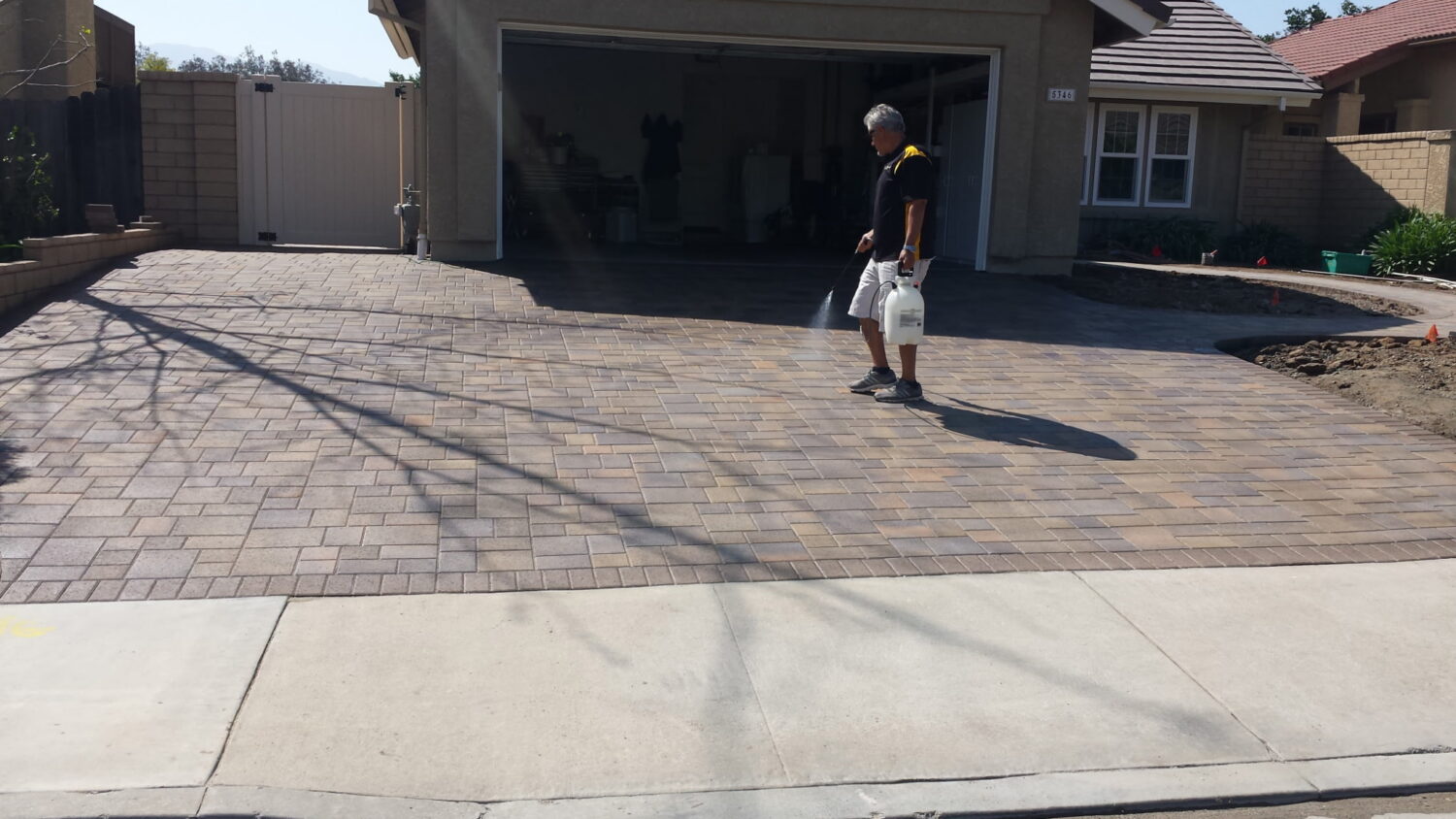
Venco’s reviews reflect this kind of work directly — clients have written specifically about drainage and grading fixes, and about repairs after storm damage to paver patios, not just new installs. It’s a real part of what we do here, not an afterthought.
Don’t wait for the first storm to find out
With a winter like this forecasted, the smart move is getting a drainage assessment done now, while there’s still time to fix a problem before it’s underwater. Call Venco Construction at (805) 890-6189 for a free estimate, and we’ll take a look at your driveway, patio, or retaining wall before this El Niño season tests it for you.